Hey there! As a forklift supplier, I often get asked about the differences between rough terrain forklifts and regular forklifts. It’s a valid question, especially if you’re in the market for a new forklift and trying to figure out which one is the right fit for your business. So, let’s dive into it and take a closer look at how these two types of forklifts stack up against each other. Forklift
Design and Build
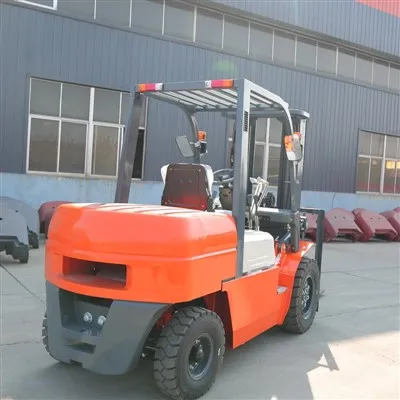
First things first, let’s talk about the design and build of these forklifts. Regular forklifts are typically designed for indoor use in warehouses, distribution centers, and other flat, smooth surfaces. They’re built with smaller wheels and a lower ground clearance, which makes them more stable and maneuverable in tight spaces. The frames are usually smaller and more compact, allowing them to fit easily through doorways and navigate around racks.
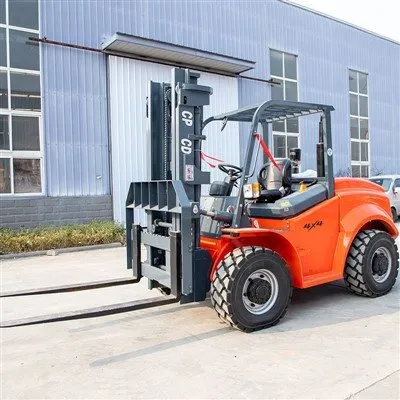
On the other hand, rough terrain forklifts are built like tanks. They’re designed to handle the toughest outdoor conditions, so they come with large, heavy-duty tires that have deep treads for better traction on uneven ground. The ground clearance is much higher, which means they can drive over rocks, logs, and other obstacles without getting stuck. The frames are also larger and more robust to withstand the bumps and jolts of rough terrain.
Lifting Capacity
When it comes to lifting capacity, both types of forklifts can vary widely depending on the model. Regular forklifts generally have a lifting capacity ranging from 1 to 5 tons. This is usually sufficient for most indoor applications, like moving pallets of goods around a warehouse.
Rough terrain forklifts, however, are often more powerful. They can have a lifting capacity of anywhere from 4 to 10 tons or even more. This higher capacity is necessary because they’re often used in construction sites or agricultural settings where they need to lift heavy materials like bricks, lumber, and large machinery.
Maneuverability
Maneuverability is a key factor in choosing a forklift. Regular forklifts are designed to be highly maneuverable in tight spaces. They have a small turning radius, which means they can easily turn around in narrow aisles. Many models also come with features like electric steering, which makes it even easier to control the forklift with minimal effort.
Rough terrain forklifts, while not as maneuverable as their regular counterparts, are still designed to be fairly easy to handle in outdoor environments. They use a different type of steering system that’s more suitable for uneven ground. However, because of their larger size and heavier weight, they do require more space to turn and can’t navigate as easily in tight quarters.
Power Source
The power source is another area where these two types of forklifts differ. Regular forklifts commonly come in electric, gas, and diesel varieties. Electric forklifts are popular for indoor use because they’re quiet, produce zero emissions, and are relatively inexpensive to operate. Gas and diesel forklifts, on the other hand, offer more power and are better suited for heavier loads, but they do produce emissions and are louder.
Rough terrain forklifts are almost always powered by diesel engines. Diesel engines provide the high torque and power needed to operate on rough terrain and lift heavy loads. They’re also more reliable and durable, which is essential for outdoor work where the forklift may be exposed to harsh conditions.
Cost
Cost is always a consideration when purchasing a forklift. Regular forklifts are generally less expensive than rough terrain forklifts. This is due to their simpler design, smaller size, and lower power requirements. The initial purchase price of a regular forklift can range from a few thousand dollars to around $30,000, depending on the brand, model, and features.
Rough terrain forklifts, because of their more complex design and higher power capabilities, are more expensive. The initial purchase price can start at around $30,000 and can go up to $100,000 or more for larger, high-capacity models. Additionally, the operating costs of rough terrain forklifts are typically higher because they use more fuel and may require more maintenance.
Applications
The applications of these two types of forklifts are quite different. Regular forklifts are mainly used in indoor settings for material handling. They’re great for loading and unloading trucks, moving pallets around a warehouse, and stocking shelves. They’re also used in retail stores, manufacturing plants, and other facilities where goods need to be moved efficiently within a confined space.
Rough terrain forklifts are used in outdoor applications where the ground is uneven and the loads are heavy. Construction sites are a prime example, where they’re used to lift and move building materials like steel rods, concrete blocks, and roofing materials. They’re also used in agriculture for tasks such as moving bales of hay, loading and unloading farm equipment, and moving heavy crates.
Maintenance
Maintenance is an important aspect of owning a forklift. Regular forklifts, especially electric ones, are relatively easy to maintain. They have fewer moving parts compared to diesel or gas-powered forklifts, which means there are fewer things that can go wrong. Electric forklifts mainly require battery maintenance, such as charging and occasional battery replacement. Gas and diesel forklifts need regular oil changes, filter replacements, and engine tune-ups.
Rough terrain forklifts, due to their heavy use in harsh outdoor conditions, require more extensive maintenance. The tires need to be checked regularly for wear and tear, and the suspension and steering systems also need to be inspected frequently to ensure they’re in good working order. The diesel engines also require more frequent maintenance to keep them running smoothly.
Conclusion
So, there you have it! The main differences between rough terrain forklifts and regular forklifts boil down to their design, lifting capacity, maneuverability, power source, cost, applications, and maintenance. If you’re mainly working in an indoor environment with flat surfaces and lighter loads, a regular forklift is probably the way to go. But if you need to work outdoors on rough terrain and lift heavy materials, then a rough terrain forklift is the better choice.
Wheel Loader As a forklift supplier, I’m here to help you make the right decision for your business. Whether you’re a small warehouse owner or a large construction company, I can offer you a wide range of forklifts to meet your needs. If you’re interested in learning more or want to discuss your specific requirements, don’t hesitate to reach out to me. We can talk about the best options for your budget and applications.
References
- "Forklift Operator’s Manual" by various manufacturers
- "Materials Handling Equipment Handbook" by industry experts
Jining Sunsail Machinery Co., Ltd.
With abundant experience, we are one of the most professional forklift manufacturers and suppliers in China. We warmly welcome you to buy high-grade forklift made in China here from our factory. For price consultation, contact us.
Address: Room 410, Digital Industry Building, Rencheng District, Jining City, Shandong Province,China
E-mail: Sunsail_machinery@163.com
WebSite: https://www.sunsailmachine.com/
