If you’ve ever worked with electrical components or managed a supply chain for power solutions, you’ve likely come across the term “Cn Standard Plug Pin” in your sourcing journey. As a supplier who’s specialized in manufacturing and distributing these components for over seven years, I get asked one question more than any other: “What’s the current rating of the Cn Standard Plug Pin right now?” It’s a fair question—current rating isn’t a static number; it’s tied to safety standards, real-world usage, and the evolution of how we design and use electrical systems across China and beyond. Let me break this down not just from a technical standpoint, but from the perspective of someone who’s seen this industry shift firsthand. Cn Standard Plug Pin
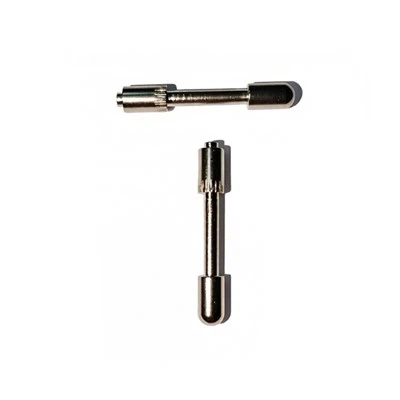
First, let’s clarify what we mean by “Cn Standard Plug Pin.” The Cn here refers to the Chinese national standards, officially known as GB (Guobiao) standards, developed and maintained by the Standardization Administration of China (SAC). These standards govern everything from the size of plug pins to their electrical performance, and they’re designed to ensure compatibility, safety, and reliability for everything from household appliances to industrial machinery. Over the past two decades, these standards have been updated multiple times to keep pace with global best practices and new technologies, and the current current rating for the most widely used Cn Standard Plug Pin is 10A at 250V AC. But before you assume that’s a hard, unchanging rule, let’s dig into why that’s the case—and where there’s nuance that many people, even in the industry, miss.
The 10A rating isn’t arbitrary. For most of China’s mainstream household and light commercial applications, that’s the sweet spot. Think about it: a standard table lamp, a small refrigerator, a microwave, a laptop charger—all of these draw between 1A and 8A at peak use, so a 10A pin has been calibrated to handle that load without overheating or failing. The design of the Cn Standard Plug Pin itself plays a big role here too. Unlike some international variants, the Chinese standard uses a brass alloy with a specific thickness and conductivity, and the pin’s contact surface pressure is engineered to maintain a consistent connection even with repeated insertion and removal. For our manufacturing team, that means every pin we produce goes through a series of resistance tests: we measure contact resistance to ensure it stays below 0.5 milliohms, because higher resistance creates heat, which is the leading cause of plug pin failures.
But here’s the part that surprises a lot of people: the 10A rating is the most common, but it’s not the only current rating for Cn Standard Plug Pins. There’s also a 16A variant, which is designed for higher-power devices like air conditioners, electric water heaters, and industrial power tools. For context, a 16A pin can handle up to 4,000 watts at 250V AC, which is enough for a 1.5-ton air conditioner or a small welding machine. When we first started carrying 16A pins, back in 2015, demand was low—only a handful of HVAC manufacturers were using them. Today, 16A Cn Standard Plug Pins make up nearly 30% of our monthly shipments, as China’s focus on energy-efficient, high-power home appliances has grown. That’s a real-world example of how current ratings adapt to what end users need, not just what the standards set.
Now, let’s talk about where the “current rating” conversation gets more complex. In recent years, there’s been a push from SAC and electrical safety organizations to re-evaluate the 10A rating for newer devices. For example, fast-charging power adapters for electric bicycles—once a niche product—now draw close to 10A during peak charging. We’ve had several customers come to us in the last two years asking for 10A pins with higher thermal tolerance, because standard pins would get too hot after 10+ hours of charging. In response, we developed a modified 10A pin made with a higher-grade brass alloy, heat-treated to withstand temperatures up to 125 degrees Celsius, compared to the standard 85 degrees for basic pins. This isn’t a change to the national standard, but it’s a practical update that aligns with real usage, and it’s become one of our fastest-selling SKUs.
I want to address a common misconception here: many people outside the industry assume that the Cn Standard is less rigorous than, say, the IEC standards used in Europe or the U.S. But in fact, the latest revisions of GB 1002-2021, which covers plug and socket outlets for household and similar purposes, actually align closely with IEC 60884. The current rating testing process is identical: each batch of plug pins undergoes load testing, where they’re subjected to 110% of their rated current for 1,000 insertion cycles, and checked for any signs of melting, excessive wear, or connection failure. As a supplier, we don’t cut corners on this—our factory has ISO 9001 and ISO 45001 certifications, and every pin we ship comes with a batch test report that details its current rating and performance.
Over the years, we’ve also seen how the demand for Cn Standard Plug Pins has shifted globally. A lot of companies that used to source pins from smaller, uncertified manufacturers in China are now turning to suppliers like us, because they need reliable, standardized pins that meet international safety codes. For example, a few years ago, we started shipping pins to a furniture brand in Germany that was designing line of power-integrated sofas for the Chinese market. They specifically required 10A Cn Standard Plug Pins that could be used in both China and Europe, so we had to adjust the pin’s dimensions slightly to fit both GB and IEC sockets, while keeping the current rating intact. That’s the kind of cross-border collaboration that makes this industry interesting—current ratings aren’t just a domestic issue anymore.
But let’s get back to the original question: what is the current rating of the Cn Standard Plug Pin, right now, in 2024? The short answer is that the most widely used and standardized current rating for general-purpose Cn plugs is still 10A at 250V AC, with the specialized 16A rating for high-power applications. That said, there are emerging trends that could change this in the next few years. The rise of small electric appliances—like portable ovens, powerful vacuum cleaners, and even outdoor power banks that can power tools—has led SAC to conduct a review of GB 1002, with expected updates to current rating limits for next-gen devices. Our team has been working with a group of appliance manufacturers to test prototype pins that can handle up to 13A, which would bridge the gap between the 10A and 16A ratings for mid-power devices.
As someone who’s been in this business for long enough, I know that choosing the right plug pin isn’t just about checking a box on a spec sheet. A wrong current rating can lead to overheating, electrical fires, or device failure—consequences that no manufacturer or end user wants to deal with. Last year, we had a customer who switched to a cheaper, uncertified plug pin for their line of small kitchen appliances. Within six months, they had 120 warranty claims from overheating pins that had a falsely labeled 10A rating, but could only handle 8A. They came back to us, and we supplied them with our certified 10A pins, along with a training guide for their production team on how to verify current ratings through batch testing. That’s the kind of problem we help solve every day—by not just selling pins, but sharing our knowledge about what those ratings actually mean in practice.
If you’re sourcing Cn Standard Plug Pins for your next project, whether you’re a small appliance maker, a furniture designer, or a supply chain manager, you don’t have to guess at the right current rating. We work with clients to assess their specific load requirements, recommend the right pin type and rating, and provide full documentation to ensure compliance with Chinese and international safety standards. We also offer custom testing for unique applications, so if you have a device that requires a non-standard current rating, we can work with our engineering team to develop a solution.
At the end of the day, the current rating of the Cn Standard Plug Pin isn’t just a number—it’s a reflection of how we balance safety, performance, and the evolving needs of the market. As technology advances and new devices enter the market, that number will likely keep adapting, but the core goal will stay the same: to provide a reliable, safe connection that powers the things people rely on every day.
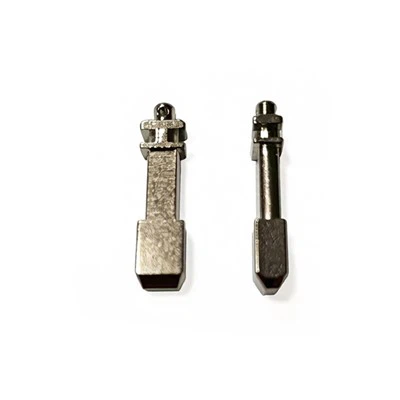
If you’re looking for reliable, certified Cn Standard Plug Pins, or you have questions about current ratings, testing, or custom solutions, we’re here to help. Reach out to our team to discuss your needs and get a tailored quote that fits your project.
Jp Standard Plug Pin References
Standardization Administration of China. (2021). GB 1002-2021: Plugs and socket-outlets for household and similar purposes.
International Electrotechnical Commission. (2020). IEC 60884-1: Plugs and socket-outlets for household and similar purposes – Part 1: General requirements.
China Electrical Equipment Manufacturers Association. (2023). Annual Report on Plug and Socket Safety Standards and Market Trends.
National Institute of Metrology. (2022). Test Report on Current Rating Performance of Cn Standard Plug Pins.
Dongguan Fangrun Metal Products Co., Ltd.
We’re well-known as one of the leading cn standard plug pin manufacturers in China, specialized in providing high quality customized products. Please feel free to buy discount cn standard plug pin made in China here from our factory. For quotation and free sample, contact us now.
Address: New Town Industrial Zone,Xiegang Village,Xie Gang Town,Dongguan City
E-mail: 825556703@qq.com
WebSite: https://www.fangrunpin.com/
