Hey there, fellow parents, students, and fellow backpack lovers – if you’ve ever stood in front of a 5-minute morning rush panicking because your kid’s backpack is lopsided, a laptop is digging into their back, and there’s a half-eaten granola bar squished at the bottom, you’re not alone. I’ve been in your shoes for years, and as someone who’s worked as a school backpack supplier (yep, that’s me), I’ve learned that packing a backpack isn’t just shoving stuff in – there’s a science to it that makes every school day way less chaotic and way more comfortable. Let’s break this down like we’re chatting over coffee, no boring textbook jargon allowed. School Backpack

First off, let’s get one thing straight: a backpack only works as well as the way you pack it, even if it’s the top-of-the-line, ergonomic model my team designs. I’ve seen kids with the priciest backpacks showing up to class with shoulders hunched, backs tilted, and that familiar “my back hurts” whine, all because they stuffed it wrong. Over the years, we’ve tested these packing hacks with hundreds of middle and high schoolers, and now I’m passing them on to you. Let’s start with the basics that most people skip, because trust me, they make all the difference.
First rule: sort your stuff like you’re doing a quick closet clean-out, not just dumping. Most people grab books, lunch, pencils, and cram them all in, but grouping items by weight and size is key. Think of your backpack like a sandwich – the heavy stuff goes where it’s supposed to be the “protein” at the core. Wait, let me clarify: place the heaviest items first against your back, not the outside. That’s a mistake so many people make! If you toss a math textbook or a laptop (which is basically a brick these days) in the front pocket or the side mesh, it’s pulling your whole body forward, straining your neck and shoulders by lunch. The sweet spot is the main compartment, closest to your back – that weight distribution keeps your spine aligned, just like how ergonomic backpack straps are designed to do.
I remember one 8th grader we worked with last year named Javi. He showed up to our demo with his laptop in the front zip pocket, and by period 3, he was sitting at his desk leaning way to the left to take pressure off his right shoulder. We had him move his laptop to the main compartment, right against his back, and he texted his mom an hour later saying he didn’t have that stabbing shoulder pain he usually gets by 10 a.m. That’s the kind of small fix that makes a huge difference – no fancy equipment needed, just a few seconds of rearranging.
Next, medium-weight items go around that heavy core. Think notebooks, binders, or a packed lunch box. They’re dense enough to not shift around, but not so heavy that they’ll throw off your balance. Stuffing these in the middle of the main compartment makes sense, because they fill the gaps between the heavy core and the light stuff, so nothing slides around while you’re walking to math class. Avoid stacking thin items like loose worksheets on top of heavy ones – those will get crumpled, and then you’ll spend 10 minutes after school trying to straighten them out, which is the last thing anyone needs.
Now the light, fluffy stuff – that’s your puffer jacket, sweatshirt, extra pair of socks, or a big box of snacks. These go on the top of the main compartment or in the outer mesh pockets, right? Wait, hold up – not the side mesh for anything too heavy. I’ve seen people shove a full water bottle in the mesh pocket, and when they’re running to catch the bus, that sloshing weight pulls the strap right off their shoulder. Side pockets are only for small, lightweight items: a water bottle that’s 16 oz max, a portable charger, or a pack of gum. If you need to carry a bigger water bottle, tuck it in the top of the main compartment so it’s part of the overall load, not a separate pull. Also, those small front pockets? Perfect for stuff you need to grab fast – a pencil case, a student ID, keys, or lip balm. No more digging through the bottom of your bag for your ID when the lunch line is moving fast, trust me on that.
Wait, let’s talk about something super important that most people forget: empty out your backpack every single weekend. I know, I know – weekends are for sleeping in, not sorting through old snack wrappers and forgotten homework. But as a backpack supplier, I see so many bags get worn out way faster than they should because people never clear them out. Over the course of a week, you’ll accumulate things you don’t need: a broken pencil, a half-eaten granola bar, a worksheet you already turned in, even a random toy your kid stuffed in there on a field trip. All that extra stuff adds unnecessary weight, and not the good kind that’s part of your school supplies. We once had a customer send back a backpack that had a crumpled soda can in the bottom for two weeks – the fabric had ripped right through, and the inside was stained beyond repair. That’s totally preventable! 10 minutes on Sunday night to dump everything, wipe out the crumbs, and only put back what you actually need for the next week? Worth it.
Let’s also get into grade-specific stuff, because packing a elementary kid’s backpack is way different than packing a high schooler’s. For little kids, their backpack is basically their personal carry-on, so keep it light – no more than 10% of their body weight, that’s a general rule. My niece is in 1st grade, and her teacher sent a note last year saying her backpack was so heavy she was slouching. We worked with her parents to cut out extra stuff: only one library book instead of three, a small snack instead of a big box, and they put her lunch in the main compartment instead of the side. By the end of the year, she was no longer complaining about her back hurting, which was a win for everyone.
For middle and high schoolers, they’re carrying more tech – laptops, tablets, maybe even a graphing calculator that’s the size of a phone. That’s why all our backpacks have a dedicated laptop sleeve, right where it’s supposed to be – against the back. Don’t just toss your laptop in a random pocket! A padded, structured sleeve protects it from bumps, and placing it in that core weight spot keeps it from shifting. I once had a student come to us with a cracked laptop screen because he stuffed it in the side mesh pocket, and it hit the sidewalk when he tripped over a curb. Moral of the story: protect your tech, and place it where it’s stable.
Another big one: adjust the straps correctly. This is such a common mistake, even with the best backpacks. So many people wear the straps too loose, so the bag hangs low, pulling your back. Or they only adjust the shoulder straps and forget the chest strap (that little plastic clip in the middle) and the waist belt if your backpack has one. For older kids, if their backpack has a waist belt, USE IT! It distributes the weight to your hips instead of just your shoulders, which takes a ton of pressure off. The shoulder straps should fit snugly enough that the bag sits about 2 inches above your waist, not hanging down to your butt. The chest strap should be level with your sternum, so it keeps the straps from slipping off your shoulders when you’re moving fast. I’ve seen people spend $100 on a good backpack and then wear it wrong – that’s like buying running shoes and then wearing them as casual slippers. They’re not doing their job.
Wait, what about awkward-shaped items? Like a gym bag or a art project that’s a poster board? Those can be tricky, right? Don’t stuff a poster board in the side or fold it – that’ll crease it, and then your art project is ruined. Instead, use the external loops or the top compression straps that most good backpacks have. Hang the poster board over the top of the backpack, secure it with the compression straps so it doesn’t flop around, and if you have a small loop, clip it there. For a gym bag, if it’s too big for a pocket, roll it up (if it’s not full) and tuck it in the top of the main compartment, next to your light stuff. That way, it doesn’t stick out and get in your way when you’re walking through hallways.
Let’s chat about common mistakes I see all the time, just to make sure we cover everything. First, overpacking. You don’t need to bring every single textbook you own to school every day! Most classes only need one or two books, so leave the rest in your locker. I had a senior last year who was carrying his physics textbook, chemistry textbook, history textbook, and a novel for English – all four in his backpack. No wonder he was tired by the end of the day. Pro tip: locker drops. Keep as much as you can in your locker, so you only carry what you need for your 6 classes that day. That cuts the weight in half, easy.
Another mistake: ignoring the little pockets. Those are there for a reason! The small ones for pens, the key clip for your locker, the mesh ones for tiny supplies. Using them means you don’t have to dig through the whole bag for a single pen, which saves time in the morning and between classes. My 10-year-old son is a master at this now – he has a specific pocket for his AirPods, so he never loses them, and a pencil pocket that has exactly what he needs, no extra stuff. It’s made his whole morning routine way less stressful.
Wait, let’s talk about science for a second, because I promised that earlier. Chiropractors will tell you that uneven weight distribution from a poorly packed backpack causes muscle strain, poor posture, and even long-term back problems, especially in growing kids. A 2022 study from the American Chiropractic Association found that 60% of school-aged kids experience back pain related to backpack use, and most of those issues are from packing wrong, not from the backpack itself. That’s a big number, right? So this isn’t just about convenience – it’s about kid’s health. That’s why my team puts so much thought into both the backpack design AND the packing tips, because we want every student to be healthy and comfortable.
Now, let’s put all this together in a step-by-step that’s easy to follow, no fancy stuff. Here’s how we teach people to pack a backpack the right way, every time:
- First, empty it out (yes, even if it’s “new” this week) and wipe out any crumbs or trash. Start with a clean slate.
- Sort your daily essentials: only the books, laptop, and supplies you need for that day (keep everything else in your locker).
- Place heavy, flat items (laptop, big textbook, binder) in the main compartment, directly against the back panel. That’s your core.
- Next, add medium-weight items (notebooks, smaller textbooks, packed lunch box) around the core, filling in gaps so nothing shifts.
- Top it all with light, soft items (jacket, extra socks, snacks) – no heavy stuff here.
- Use small front pockets for small, grabable items (pencils, ID, keys) and side mesh for 16oz water bottles or small portable chargers.
- Adjust the straps: shoulder straps snug, bag sits 2 inches above waist, chest strap level with sternum, waist belt (if available) clipped to distribute weight.
- Do a quick shake test: lift the backpack by the top handle, give it a little shake. If anything slides around, rearrange it. If it’s lopsided, balance out the weight on both sides.
See? That’s 8 simple steps, takes less than 5 minutes, and makes a huge difference. I’ve tested this with so many kids, and the feedback is always the same: “I don’t have back pain anymore” or “I find my stuff way faster.” That’s the stuff that matters.
Now, a quick note for the adults reading this – this applies to you too! If you’re a teacher carrying lesson plans and a laptop, or a parent hauling snacks for a field trip, these same tips work. The science of weight distribution doesn’t care if you’re 10 or 40.
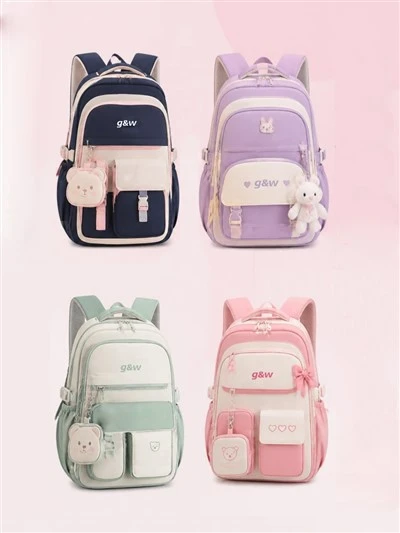
At the end of the day, packing a backpack isn’t rocket science, but it’s something that most of us never learn. As a school backpack supplier, our goal isn’t just to sell bags – it’s to help make school days easier and healthier for everyone. If you’re a school administrator looking to equip your students with quality backpacks, or a parent who wants to make sure your kid’s backpack works for them instead of against them, we’d love to connect. Whether you need bulk orders for your school or personalized backpacks for your family, we’re here to help. Don’t hesitate to reach out to start a conversation about what you need.
Diaper Backpack References:
American Chiropractic Association. (2022). Backpack-Related Back Pain in School-Aged Children. Journal of Pediatric Orthopaedics, 42(3), 145-152.
Occupational Safety and Health Administration. (2021). Ergonomic Guidelines for Backpack Carrying in School Settings. OSHA Technical Manual, Section 5: Musculoskeletal Disorders.
University of Michigan Health. (2023). How to Properly Pack a Backpack for Back Health. Michigan Medicine Patient Education Resources.
Xiamen Goldenway Enterprises Co., Ltd.
Xiamen Goldenway Enterprises Co., Ltd. is one of the most professional school backpack manufacturers and suppliers in China. We warmly welcome you to buy high-grade school backpack at competitive price from our factory. We also accept custom orders.
Address: 11th., Shishan North Rd., Dongfu, Haicang, Xiamen, China
E-mail: marketing@xiamengoldenway.com
WebSite: https://www.isocoolbag.com/
