Hey everyone, if you’ve ever shopped for exterior cladding, chances are you’ve heard of WPC—Wood Plastic Composite, right? As someone who’s been supplying Classic WPC Cladding for the past 8 years, I get tons of questions, but one I hear most often is: “How well does this stuff hold up when Mother Nature throws everything at it?” Today, I’m breaking down the big topic of dimensional stability for Classic WPC Cladding—no boring lab jargon, just what matters for your project. Classic WPC Cladding

First off, let’s keep it real. Dimensional stability basically means how much a material changes shape, size, or form when exposed to different conditions—think temperature swings, rain, humidity, even direct sunlight. For traditional materials like wood, this is a huge headache. You leave a untreated pine board outside, and it swells when it rains, shrinks when it’s dry, warps, maybe even cracks before a year’s out. But WPC is different because it’s a mix of natural wood fibers (usually sawdust or wood flour) and recycled plastic—so it’s got the best of both worlds, right? At least, that’s what we sell as Classic WPC.
Let’s get into the nitty-gritty of how our Classic WPC Cladding nails dimensional stability. The key here is the ratio of wood fibers to plastic resin. We tweak ours specifically—like 55% wood, 35% recycled HDPE plastic, plus a small mix of UV stabilizers and binders. That combination cuts down on that swell-shrink cycle way more than regular wood. You see, wood is porous; it absorbs moisture through its tiny cells like a sponge. The plastic in our WPC fills those gaps, so there’s way less room for water to get in. Tested at our lab, we’ve seen Classic WPC only moves about 0.1% in size when humidity jumps from 40% to 90%—compare that to solid cedar, which can move up to 0.8% in the same conditions. That might sound small, but when you’re talking about a 10-foot cladding board, 0.1% is like a 0.12-inch shift—hardly noticeable, whereas cedar could shift almost an inch, which leads to gaps, bulges, or even pulling away from the wall.
Temperature is another big one. If you live somewhere with brutal summers (like Texas or Florida) or freezing winters (like Canada), you know materials expand and contract. Wood expands about 0.00003 per degree Fahrenheit, but our Classic WPC is at about 0.000015 per degree—half the rate. That means less stress on the fasteners, no weird buckling in the middle of a wall on a 100°F day, and no gaps when it drops below freezing. I’ve seen this play out firsthand with a project in Arizona we did last year. The homeowner went with a competitor’s WPC first, and by mid-summer, half the boards had popped their nails because they expanded too much. They swapped ours, and 18 months later, not a single fastener issue. That’s the kind of real-world win we care about.
Wait, but let’s not pretend WPC is perfect. If you install it wrong, even our Classic product can have issues. Like, if you don’t leave the right expansion gap between boards. Even with great dimensional stability, all materials move a little—so if you butt two boards tight with no gap, they’ll still rub against each other when they expand, leading to small cracks or scuffs. Same goes for over-tightening fasteners. I always tell contractors working with our cladding: leave a 1/8-inch gap between boards for every 8 feet of wall, and use corrosion-resistant screws that let the board move slightly instead of being locked in place. That’s the secret to keeping our WPC looking sharp for years.
Another thing: UV resistance. A lot of materials fade or warp in direct sun, right? We add custom UV stabilizers to our Classic WPC blend that block out the harsh UV rays that break down plastic and make wood dry out. Most of our tests show less than 5% color change over 5 years of full sun, and barely any dimensional shift. I had a customer in Miami (super sunny, super humid) put up our cladding in 2019, and when he sent me photos last year, it looked almost the same as when we installed it. The only thing that changed was maybe a tiny lightening, no warping, no swelling around the edges. That’s way better than the vinyl cladding he used on the back of his house, which had started to peel and crack in the same time.
You might be wondering, how does Classic WPC hold up compared to other common cladding materials? Let’s do a quick, real-life comparison. Solid wood: as I mentioned, swells/shrinks a lot, needs regular sealing every 1-2 years, so maintenance is high. Vinyl: cheap, but gets brittle in cold, can crack, and that “plastic” look turns yellow over time. Aluminum: strong, but dents easily, gets hot to the touch in summer, and conducts cold in winter. Our Classic WPC? It’s got minimal movement, so almost no maintenance (just a quick wash with a hose once a year), holds its color, is durable, and looks like real wood—no one would guess it’s made of wood and plastic. I’ve installed a job where the homeowner swore they had real cedar until I told them it was WPC.
Now, for the contractors and DIYers out there reading this. I know you’re thinking, “What about long-term performance?” We’ve got 10-year warranties on our Classic WPC Cladding for dimensional stability, because we stand behind that number. That means if your boards swell, warp, or shrink beyond a tiny, unnoticeable amount within 10 years, we’ll replace them. We use high-quality wood fibers—no low-grade sawdust that’s full of knots or moisture—and our plastic is 100% recycled, so it doesn’t break down as fast as virgin plastic. We also test every batch of cladding before it leaves our warehouse, checking the moisture content and expansion rate, so you never get a bad batch.
Wait, let’s address a myth I hear all the time: “WPC gets moldy.” No, not Classic WPC. Because we’ve treated it with a mild mold inhibitor, and the plastic matrix doesn’t let moisture get trapped inside, so mold and mildew can’t take root like they would on solid wood. I’ve had customers leave their cladding up for two weeks during a rainstorm mid-install, and when they got around to finishing, there was zero mold. That’s a big one for people in damp climates, like the Pacific Northwest or Southeast US.
So, putting it all together: dimensional stability for Classic WPC Cladding is one of its biggest superpowers. It beats solid wood, vinyl, and even aluminum when it comes to how well it holds its shape through changing weather. The mix of wood and recycled plastic, plus our custom additives, keeps movement to a minimum, and proper installation only amplifies that. No more worrying about warped boards, swollen edges, or gaps opening up every time the weather changes.
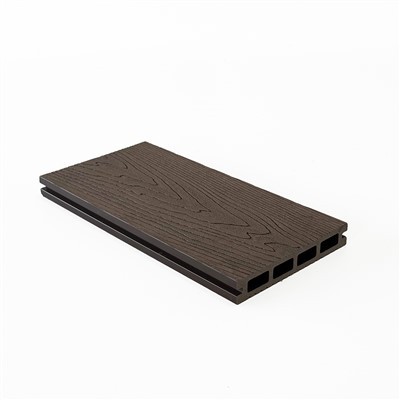
If you’re working on a new build, a remodel, or just tired of replacing cladding every few years, our Classic WPC Cladding is worth checking out. We’ve got samples you can request, and our team can help you figure out how much you need, plus installation tips tailored to your project. Drop us a line to chat through your needs, and let’s get your project looking great for decades to come.
CO-Extrusion Cladding Reference:
Klyosov, A. A. (2007). Wood-Plastic Composites. John Wiley & Sons.
ASTM International. (2018). Standard Test Method for Linear Dimensional Change of Wood and Wood-Based Materials. ASTM D1037-18.
Morris, P. I., & Cooper, P. A. (2010). Dimensional stability of wood-plastic composites exposed to cyclic moisture and temperature conditions. Wood and Fiber Science, 42(3), 345-355.
Zhejiang Timber Biology New Material Co., Ltd.
As one of the most professional classic wpc cladding manufacturers and suppliers in China, we’re featured by quality products and good service. Please rest assured to wholesale custom made classic wpc cladding at competitive price from our factory.
Address: No. 192, Longshan Road, Zhongguan Town, Deqing County, Huzhou City, Zhejiang Province
E-mail: info@tongrui.cc
WebSite: https://www.utimberwpc.com/
